


The Roles Less Spoken Of
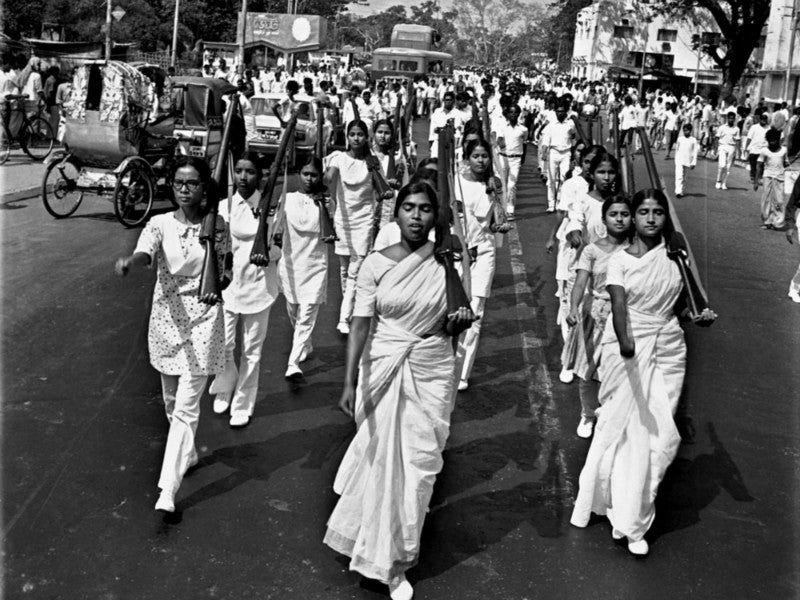
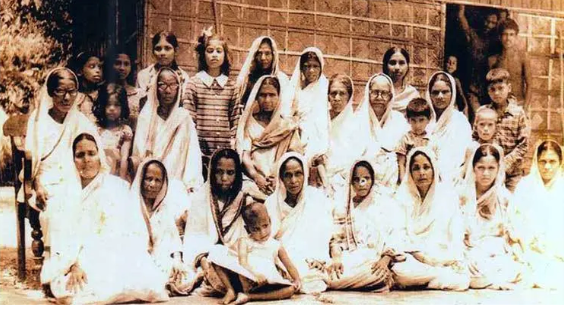
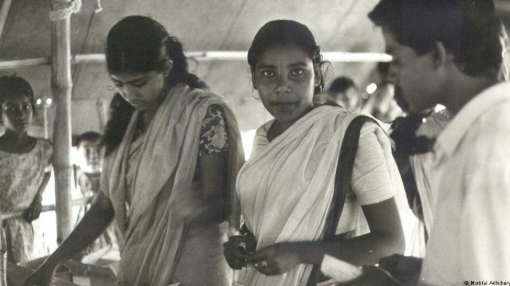
The brave women of Bengal took the responsibility to participate in combat and non-combat work that supported the Liberation War. They did so through directly taking part in the war, acting as spies, supervising various organisational activities in refugee camps, sacrificing their safety to provide food and shelter, and preaching to international people. Despite women participating in the war as caretakers and fighters, their voices are left out.
In the context of the 1971 Liberation War, women are mostly framed as 'Birangona', women who endured sexual violence. Some were indeed victims of rape; however, the background tells that many became targets because they were actively managing and executing tasks in the war.
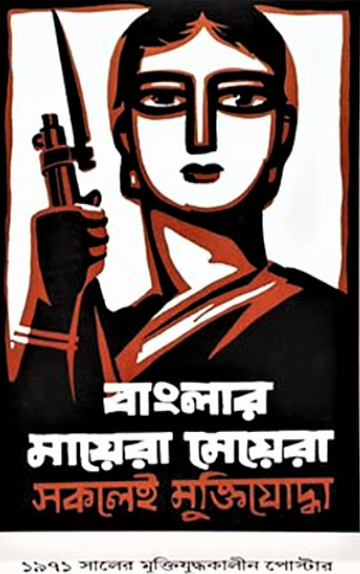
Women in Combat Roles
There were female individuals who took on the roles of spies, weapon smugglers, and armed fighters. Some disguised themselves as men, and others openly served as women.
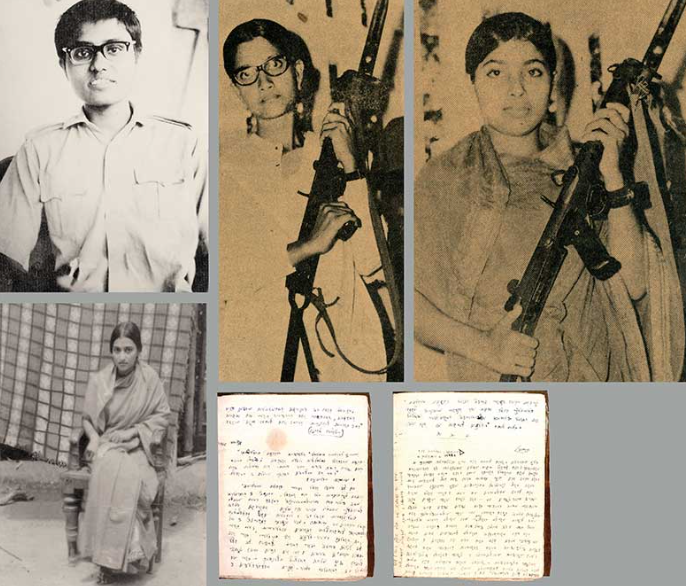
Armed Involvement
In their armed involvement, common was the collection and supply of weapons and the exchange of information on behalf of the liberation forces.
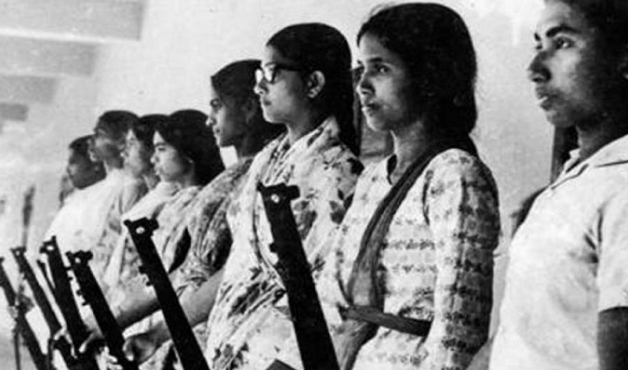
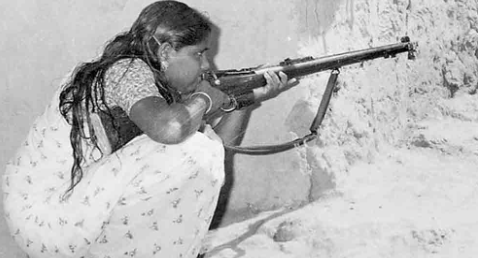
The freedom fighter, Alamtaj Begum Chhobi from Barishal, was present in an operation at the Gab Khan canal, the first person among 5-6 boys to throw a grenade. She was courageous enough to bayonet a Razakar.
Freedom fighters and political activists like Shirin Banu Mitil disguised herself as a man to battle against the Pakistani military. She was only in her 20s when she got herself involved in this.
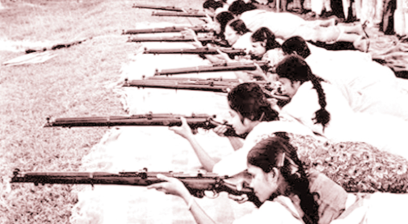
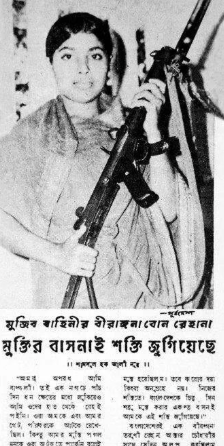
Teenage girls, like Halima Parveen and Taramon Bibi, fought directly against the Pakistani army using guns. Halima Parveen was 16 years old and enthusiastic in political aspects of the country's liberty. She secretly joined a militia and received guerrilla training. She was seized from her village and raped in Pakistani army custody.
At 14 years, Taramon Bibi joined the camp and fought against Pakistanis in Kurigram. Her godfather, Muhib Habildar, saw her bravery and vision, which led to her training in the use of a rifle and a Sten gun. She also bore arms and weaponry.
Nipa Lahiri, a Dhaka Medical College student, sacrificed her life. She wanted to be part of the freedom-fighting force. She was trained in running, crawling, ambushing, and endangering the enemy, throwing grenades, laying and detonating mines and operating LMGs. During the duty, she tried to run with bags of weapons and was shot by a bullet.
Scope and Limitations of Armed Conflict
Many women were personally engaged in the Language Movement, or saw their family members getting involved in liberation. Some women participants were active in the Bengali nationalist movements and carried communist ideology. Their student life played a great role in evoking leftism. The teachers in educational institutions trained them.
Women's armed participation was limited in numbers but thoughtfully arranged and intentional. Syeda Sajeda Chowdhury, a member of the National Assembly, assisted in preparing women. She arranged training with dummy rifles at her residence in Dhaka. She established the 'Gobra Mohila Muktijodhha' Camp in Kolkata. A total of 32 women were trained. Their contribution mostly remained in a limited range of training, support, and care work. Bangladeshi writer and veteran Syeda Isabella was involved in training activities at the Roumari Youth Camp, Kurigram. The recruitment was conducted through Agartala, shifted to training camps, and helped as volunteers, and encouraged others. Women's participation in armed conflict came with social conventions, limited resources and constrained roles in the dominant war.
Women in Non-Combat Roles
Is only someone who fights on the battlefield a freedom fighter? The war was a people's war. Providing food, safeguarding the male freedom fighters, serving medical care, conducting voluntary activities in refugee camps, and distributing news to wider people are also a part of the war effort. Bravery on the battlefields and courage in the domestic or informal spaces are equally significant in achieving liberation.
Intelligence and Communication
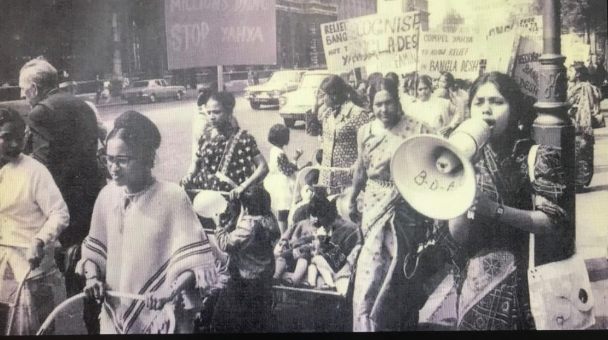
Women carried out their tasks in collecting information, and there were incidents where they were abducted during their mission and brutalised in a rape camp.
Ayesha Khanam, Dr. Makhduma Nargis Ratna, Dr. Fawzia Moslem, Farida Akhtar, Munira Akhter, Rokeya Begum, Mini Morjina, Mrs Rauf, Jahanara Begum, and Prof. Lakshmi Rani Aich, among others, participated in various activities as Liberation War organisers in Agartala. They gathered reports and information about the inhumanity of the Pakistani army against Bangladeshi women through newspapers, bulletins, and refugees. They prepared the writing booklets representing Mohila Parishad, a voluntary women's organisation.
Nurjahan Murshid, a journalist and a teacher, travelled to different parts of India to campaign for Bangladesh's Liberation war and address the brutality. Her speech at a joint session of the Indian Parliament affected Pakistan's military ruler Yahya Khan, who sentenced her, in absentia, to 14 years in prison. Freedom fighter Maleka Begum arranged campaigns across India to highlight the genocide and violence against women, calling for effective measures. Poet Sufia Kamal and Shamsun Nahar Rahman Rose carried out communication work by privately helping fighters and intellectuals cross into India while evading Pakistani forces. Women's secret networking, advocacy and information delivery escalated the war effort.
Shelter Logistics and Supply Network
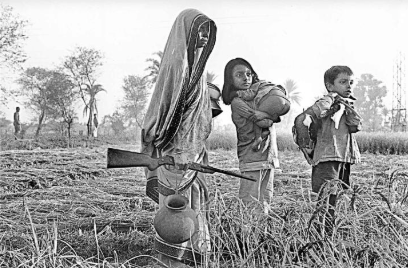
In rural places, the women notably carried the shelter and supply network role for the male freedom fighters. Farida Akhtar, UBINIG Organiser, Women Freedom Fighter, shared that there were such instances where a Pakistani Army soldier was standing on a child with his boots and killed them, but the mother could not look back because she had to take food for Muktis (fighters). This shows the ultimate sacrifices made by those mothers. Rokeya Begum, a housewife from Tangail, cooked and fed the freedom fighters. She carried food, cooked rice, sacks of it, and secured their weapons and ammunition at her house. Shanti Lata Das from Narail raised a family of six, sheltered the armed fighters in her house and helped them to hide their weapons. These women gave shelter to the fighters, and when they slept, they guarded them. To protect those freedom fighters and their families, they faced the atrocities of Razakars, Biharis, and Pakistani armies.
Medical Assistance and Care
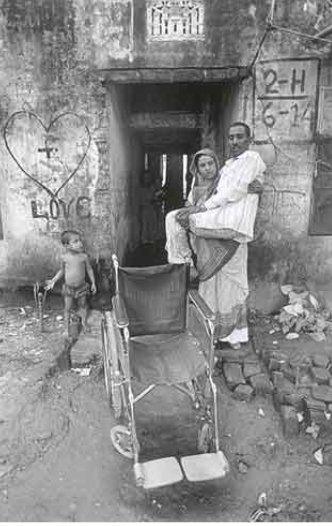
Working with the Government of Bangladesh, Tajuddin Ahmad's wife inspected refugee camps, submitted reports, and ensured the distribution of relief materials. Similarly, MNA Rafia Akhter Dolly moved to Kolkata and nearby areas to raise funds, collect clothes, and afterwards provide medical support in refugee camps.
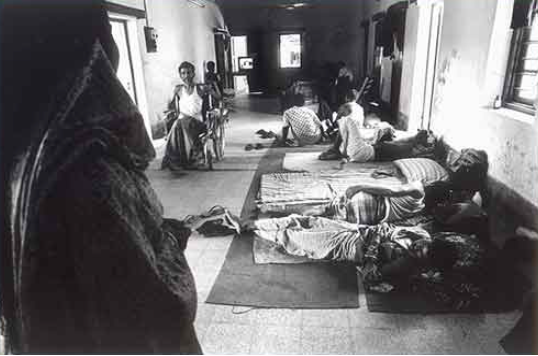
During the war, Dr Sitara Begum was appointed as the Commanding Officer of the Bangladesh Hospital with almost 400 beds. She was in charge of maintaining order and managing hospital regulations. As most of the operations were provided at night, burning hurricanes or torch lights were used. She often had to travel to collect medical supplies at high risk. Similarly, Dr Makhduma Nargis, founding member of the 'East Pakistan Mahila Parishad', the Director of 'Community Clinic', a project of the Bangladesh Government, contributed through medical services to freedom fighters in refugee camps of India and Agartala. Nipa Lahiri mastered bandaging, dressing, pushing saline, giving injections and stitches, and the names of necessary medicines to treat the fighters. Avoiding the eyes of border guards and guarding airmen,
wearing a burqa, sometimes hiding in the hull of a boat, she travelled for her duty. This participation reflects women's care networks and endurance during times of crisis.
Recognition and Documentation
Women freedom fighters struggle to find their place in Bangladeshi history.
In 1971, women contributed as motivators, organisers, social volunteers, informants and guerrilla fighters. However, they only received their acknowledgements as combat victims rather than heroes. Particularly in rural areas, the historical records of women fighters and victims are blurred.
Many women who participated in the struggle of liberation came from lower casts and classes. Thus, the researchers were unmindful of their courageous acts. Besides, Taramon Bibi, Dr Captain (Rtd.) Sitara Begum was the only other woman who was recognised with the title 'Bir Protik'. Women contributors like Nipa Lahiri didn't even get recognition as a freedom fighter, even though she gave her life in the war. After the conflict, the government and the organisations failed to take effective steps to keep a record of those women. Therefore, it is evident that out of 677 gallantry medals awarded to freedom fighters, only three have been given to women [1][2]. No woman received the highest honour from the Government.
A social stigma surrounded women who fought, particularly in the more rural areas, who were seen as loose and undignified, having served next to male soldiers. Nevertheless, each woman cited the liberation movement and fight as a key, defining point in their lives.
References
[1] United News of Bangladesh, 2022
[2] Sangbad, 2021
[3] Chowdhury, Afsan. "Women Struggle in 1971 Freedom Fight of Bangladesh - 'Their War,'" April 9, 2015. https://www.youtube.com/watch?v=GbWbZXCr1pU
[4] Bangladesh on record. "Shirin Banu Mitil | Bangladesh on Record." Bangladesh on Record, July 20, 2020. https://bangladeshonrecord.com/collection/shirin-banu-mitil/
[5] Bhowmick, Rita. "The Women Who Fueled the Liberation War, Risking Their Lives." Pressenza, December 16, 2025. https://www.pressenza.com/2025/12/the-women-who-fueled-the-liberation-war-risking-their-lives/
[6] Daily Bonik Barta. "তারামন বিবি বীরপ্রতীক যে নারী পাগল সেজে ঢুকেছিলেন শত্রুর ঘাঁটিতে," December 15, 2025. https://www.youtube.com/watch?v=4-3ttV75-Yo
[7] Sinha, Sreeya. "Interview: Elizabeth Herman on Bangladesh's Female Freedom Fighters [Photos]." ASIA SOCIETY, February 2012. https://asiasociety.org/blog/asia/interview-elizabeth-herman-bangladeshs-female-freedom-fighters-photos
[8] Sitara, Sania. "WOMEN'S PARTICIPATION IN THE LIBERATION WAR: ROLE OF THREE WOMEN FROM DHAKA MEDICAL COLLEGE." The Arts Faculty Journal 13, no. 18 (July 2022): 22–40. https://dujournal.org/wp-content/uploads/2025/02/2_Womens-Participation-in-the-Liberation_-Dr.-Sania-Sitara.pdf
[9] the POST. "যে পুরুষ অ'স্ত্র ধরেনি সে মুক্তিযোদ্ধা, আর নারীর ক্ষেত্রে যে ধ'র্ষি'তা সে মুক্তিযোদ্ধা! | the POST," December 13, 2025. https://www.youtube.com/watch?v=YppIREJitvs
[10] ডেস্কঅনলাইন. "সংগ্রামী এক নারী – আলমতাজ বেগম ছবি." Banglakagoj, August 23, 2023. https://www.banglakagoj.com/%E0%A6%B8%E0%A6%82%E0%A6%97%E0%A7%8D%E0%A6%B0%E0%A6%BE%E0%A6%AE%E0%A7%80-%E0%A6%8F%E0%A6%95-%E0%A6%A8%E0%A6%BE%E0%A6%B0%E0%A7%80-%E0%A6%86%E0%A6%B2%E0%A6%AE%E0%A6%A4%E0%A6%BE%E0%A6%9C-%E0%A6%AC/